Archive for March, 2011
Elephants are amongst the world’s most intelligent species…Elephants exhibit a wide variety of behaviors, including those associated with grief, learning, allomothering, mimicry, art, play, a sense of humor, altruism, use of tools, compassion, cooperation,[3] self-awareness, memory and possibly language.[4] All point to a highly intelligent species that are thought to be equal with cetaceans[5][6][7][8] and primates.[9][10][11] Due to the high intelligence and strong family ties of elephants, some researchers argue it is morally wrong for humans to cull them.[12]
I don’t like PETA. No, correct that. What I don’t like is PETA’s tactics and messaging. Their publicity stunts (many extreme in concept & execution) have caused the group to become a laughing stock to most people. Sadly, their cooked up stunts drown out the very real topic of cruelty to animals.
This morning I happened on this series of photos about Ringling Bros. using electro shock to train the elephants used in their shows. The more I investigated the angrier I got. It is hard not to knowing about the intelligence of these great animals.
PETA is right on what is happening as it relates to the treatment of elephants by Ringling Bros. Circus.
A recent article from Live Science discusses elephant traits, their intelligence and their innate abilities to cooperate with humans and each other.
Elephants are widely regarded as possessing advanced brains, displaying levels of intelligence seen only in humans, dolphins, chimpanzees and others capable of higher forms of thinking. For instance, elephants recognize themselves in mirrors, learning that such reflections are images of themselves and not others, behavior apparently unique to species that show complex empathy and sociality.
Watching these two videos should be enough for you to take pause and to take action.
Next time the circus comes to town, you might want to skip it until Ringling Bros. cleans up its act.
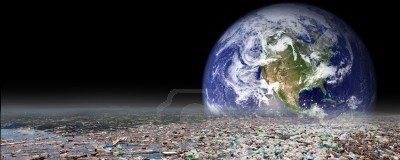
Plastic is a bigger danger than global warming, or at least it is in the immediate sense, considering it is snuffing out the lowest common denominator in the food chain, says Neil Seldman, a waste recycling expert and president of the Institute for Local Self Reliance, an organization with a long track record of promoting sustainable communities.
Forget the hokum about global warming. Plastic pollution can be seen everywhere. This problem is here now not some place in the distant future.
The vast amount of plastic trash that enters the oceans is a real problem, a problem that grows ever omnipresent on a hourly basis.
Plastic pollution is destroying the world’s ocean ecosystems. The real problem with all the plastic entering the oceans is the fact that it never degrades. It photodegrades into smaller and smaller pieces of plastic particles.
Billi
ons upon billions of smaller and smaller plastic pieces have now become part of the food chain finally absorbed within zooplankton.
The oceans are constantly in motion. Areas called gyres pull in waste from one part of the world and bring to other side of the world. As the plastic photodegrades into barely visible pieces, plankton have plastic debris in their bodies. Zooplankton are at the core of the marine food chain.
This situation is so dire that we have places in the oceans where plastic debris outnumbers plankton.
Unfortunately, that is not the worst of it. When birds, fish, and other sea creatures and mammals ingest plastic debris which they mistake platic bottle caps and bits and pieces for food’ the consequences often lead to a long slow death.
When these creatures consume plastic debris they suffer with blockages of digestive tract followed by satiation, starvation and general debilitation and finally death.
According to The Royal Society of Biological Sciences additionally they suffer a reduction in quality of life and reproductive capacity; drowning and limited predator avoidance; impairment of feeding capacity.


